Coverage and Capacity
Units are sorted by square footage from 300 sq.ft to 5500 sq.ft and pint ratings ranging from 20 Pint to 150 Pint models.
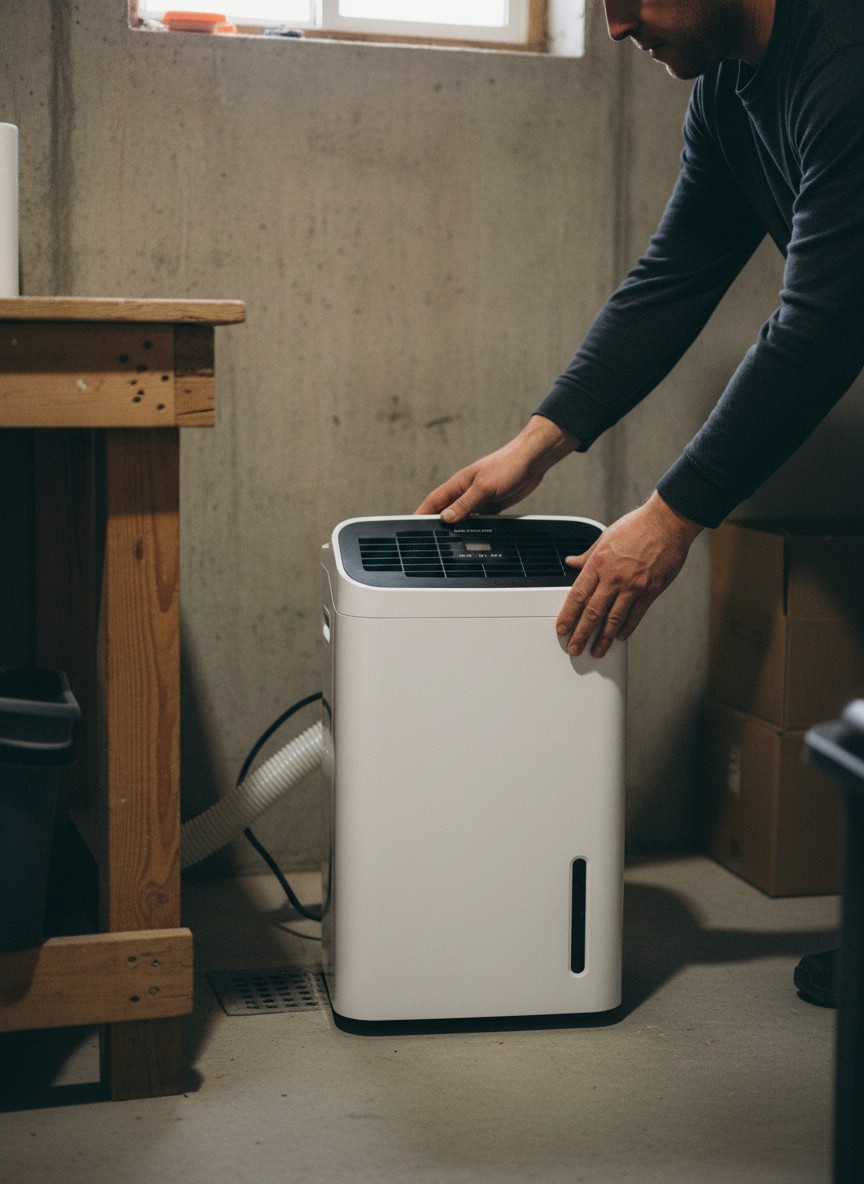
Choosing the correct dehumidifier depends on room volume, ambient temperature, and your preferred drainage method.
We organize dehumidifiers based on extraction capacity, coverage area, and mechanical features to simplify your search.
Units are sorted by square footage from 300 sq.ft to 5500 sq.ft and pint ratings ranging from 20 Pint to 150 Pint models.
We distinguish between manual tanks, gravity drain hose setups, and integrated pumps for vertical water discharge.
Models are grouped by their intended use case, including basements, crawl spaces, RVs, and high-steam bathrooms.
Ratings come from what shoppers actually said about a dehumidifier, not from a fixed formula we apply behind the scenes.
When a listing shows an average from customer reviews, that number is the main input for its score.
If we kept our own notes on a product, they carry some weight even when no public average exists.
More reviews nudge the score up slightly, very few pull it down, and listings that are often out of stock lose a little.
For small areas like closets or RVs, mini dehumidifiers or moisture absorbers are sufficient. Large open areas like 4500 sq.ft basements require 50 Pint or 70 Pint compressor units to effectively lower humidity levels.
Auto shut-off is a standard safety feature that prevents tank overflows. For low-temperature areas like garages, look for auto-defrost to ensure the unit continues running without freezing its internal components.
Bedroom and office environments benefit from ultra-quiet models or units with a dedicated sleep mode. These units often include dimmed displays and lower fan speeds to minimize disruption.
Start here, then open a couple of brand pages
Rugged units designed to combat the heavy dampness found in below-grade spaces
Ultra-quiet models that ensure a comfortable sleeping environment without disruption
Compact units specifically built to handle high-steam environments and prevent mold
Models equipped for continuous gravity drainage to eliminate manual emptying
Safety-first units that stop operation automatically when the water tank is full
Space-saving and portable units ideal for mobile living and travel trailers
Small-profile moisture removers to protect clothing and linens from musty odors
Durable units capable of operating in unconditioned workshop and storage spaces
The lower-priced listings in this catalog
Low-profile, high-output units designed for tight under-house environments
Programmable units that allow you to schedule operation for energy efficiency
Low-decibel models engineered for noise-sensitive environments